- It's Pronounced Data
- Posts
- The Butterfly Effect of 'Coulda, Woulda, Shoulda' M&A
The Butterfly Effect of 'Coulda, Woulda, Shoulda' M&A
Why Hindsight Deal Nostalgia Makes No Sense

Dan Entrup
December 08, 2025
This article is part of my newer long-form attempts. Writing was my lowest SAT score, so bear (bare?) with me. Will likely carve this out into a separate series. If you enjoy this (or just want to give an English class C student some encouragement), drop a like on my LinkedIn cross-post.

There’s a special genre of business commentary that appears at conferences, on LinkedIn, and in every investor’s group chat: the retrospective M&A lament. The crown jewel of the category, one that is resurfacing a bunch in my feed today, is “Blockbuster could have bought Netflix for $50 million in 2000.”
The implication is always the same: if only the right person had said yes, history itself would have bent in our favor. Blockbuster would still exist. Netflix would still become Netflix. We’d all be sipping from chalices of perfect corporate foresight.
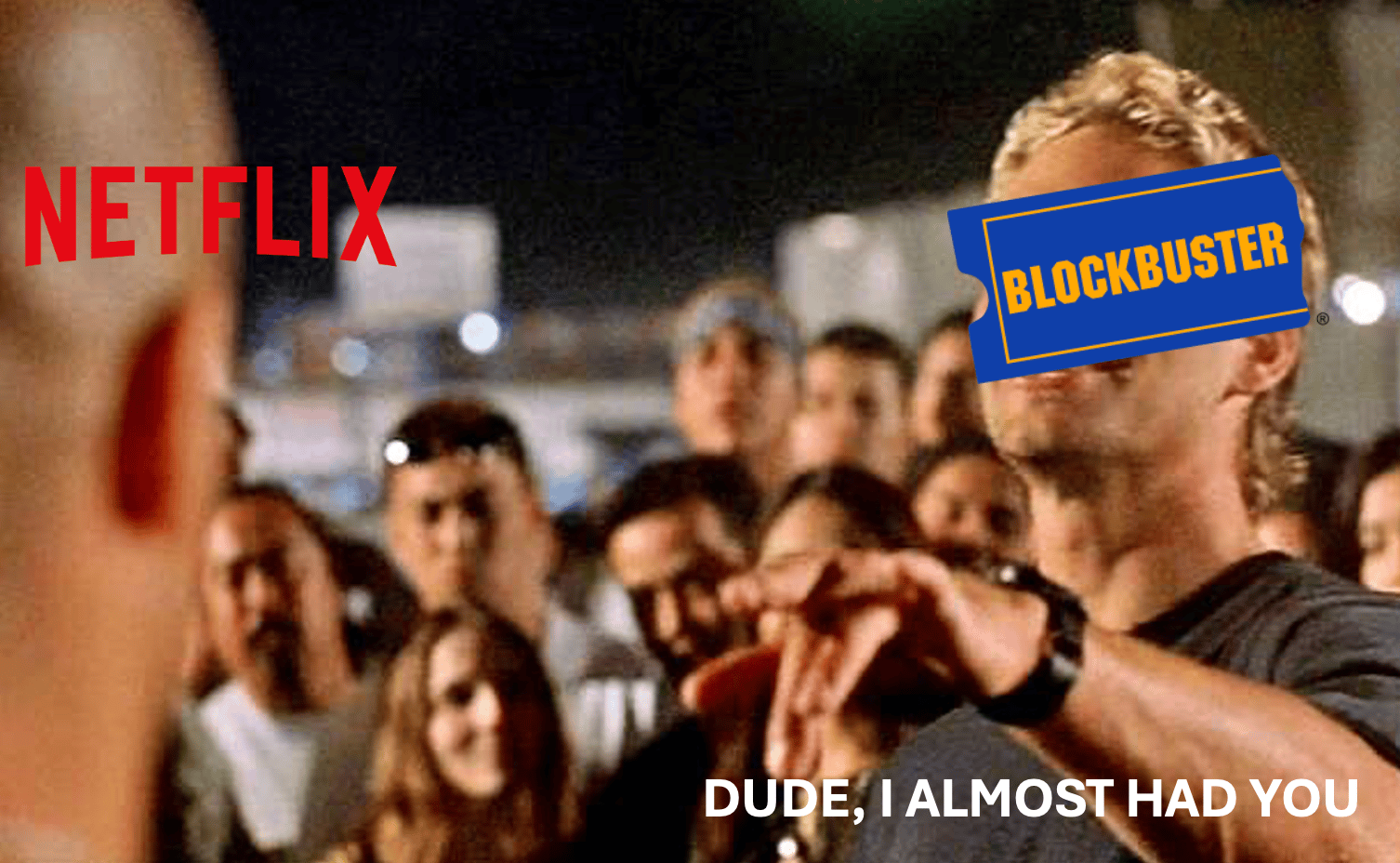
But this logic completely ignores the "butterfly effect", the idea that tiny alterations in initial conditions can lead to massively different outcomes. It treats the past as a fixed storyboard, as if buying Netflix in 2000 would’ve slotted neatly into the same narrative arc we now know.
Instead, the reality is much messier. If Blockbuster had bought Netflix, Netflix as we know it almost certainly wouldn’t exist.
Let's explore The Alternate Timeline Problem…
The 2000 version of Netflix was a fragile, experimental DVD-by-mail business, unprofitable, niche, and barely surviving the dot-com crash. It wasn’t $72 billion (or as of today there is a $108.4B offer) “Netflix.” It was “please stop calling customer support because your DVD got lost in the mail” Netflix.
Had Blockbuster acquired it, the likeliest outcomes would include:
Integration into Blockbuster’s inefficient retail-heavy operations
Starving the early tech-led culture that ultimately produced streaming
Using Netflix primarily as a marketing gimmick or mail-order coupon engine
Leadership turnover that eliminated the very people who built the modern product
Put differently, Blockbuster wouldn't have bought the future, they would've bought a butterfly and accidentally stepped on it.
I see a lot of investors (read: VCs) fall for the same trap. They love to romanticize early opportunities: “I could’ve bought Amazon in ’97” or “Facebook at its Series A!” They say it on stage at conferences in a self-deprecating while also flexing (they had the opportunity brought to them) manner.
But here’s the uncomfortable truth. If you had invested early, you’d have changed the outcome. Money comes with influence. Influence changes strategy. Strategy changes outcomes. Perhaps instead of AWS, Amazon pivots harder into books and media because your LP committee thinks cloud software is too risky. Perhaps Facebook’s early monetization is pushed too aggressively, stunting user growth.
The counterfactual isn’t "If I invested early, I’d be rich." It’s "If I invested early, the company might not become what it became."
That's the butterfly effect at work. Tiny changes in power, governance, priorities, or pressure can fundamentally alter what a business becomes.
Nothing in business dynamics works with linear, static outcomes. Companies are not destiny machines, they are ecosystems sensitive to:
Leadership
Capital
Culture (and not the kind that HR talks about during recruiting and all-hands)
Timing
Industry and macro conditions
Competitors
Random luck
Change one, you change everything. In this alternate universe, we might be saying “Remember that failed Blockbuster DVD experiment? Wild how some old startup was involved.”
I have some personal experience with this. Well, a lot more than just these examples but two to highlight:
Had I joined that startup in 2016 that went on to have a $900M+ exit, well, it's likely that exit never would have been, as who knows what path I would've “helped” put the company on.
Had my prior employer acquired LinkedIn (as they supposedly had the opportunity to in the early 2000s), I probably wouldn't even have a newsletter or be cross-posting on LinkedIn (maybe MySpace???).
Hindsight M&A regret is a comforting narrative. It assigns blame, simplifies history, and reassures us that genius is obvious after the fact. But the truth is far less cinematic. Buying a company is not the same as buying its future. And changing the past almost always erases the present.
So next time you’re beating yourself up of a “coulda, woulda, shoulda” investment or career move, remember the butterfly effect.